
From December 17 to 18, the 2025 Jinan-SMU Conference on Urban and Regional Economics was co-organized by the Institute for Economic and Social Research (IESR) at Jinan University and the School of Economics (SOE) at Singapore Management University.
The event attracted the participation of more than 60 scholars from renowned institutions, such as Cornell University, The City University of New York, South Dakota State University, Monash University, National University of Singapore, Keio University, The Chinese University of Hong Kong, Singapore Management University, Peking University, Renmmin University of China, Xiamen University, Sun Yat-sen University, Wuhan University, Fudan University, Zhejiang University, Shanghai Jiao Tong University, and Jinan University.
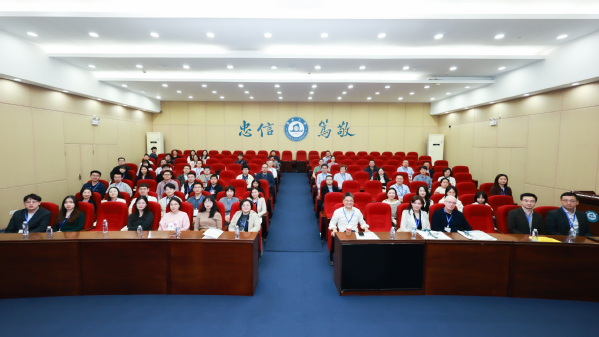
Conference Group Photo
Opening Remarks
On the morning of December 17, Professor Shimeng Liu from IESR chaired the opening remarks.
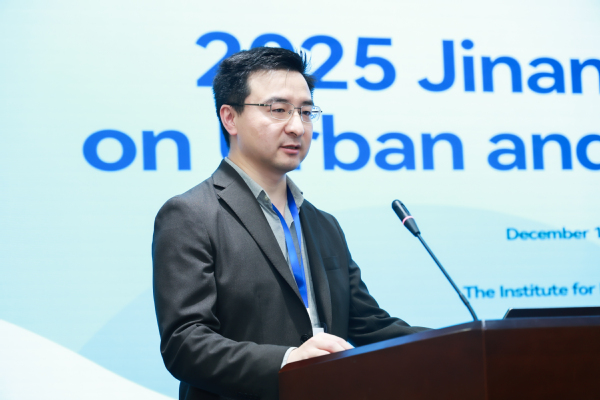
Opening Remarks by Professor Shimeng Liu
At the beginning, Professor Shuaizhang Feng, Dean of IESR, delivered a warm welcome to all participants. He then briefly outlined IESR's development and stressed that since its establishment in 2015, IESR has been committed to promoting academic exchange and cooperation with institutions and collegesworldwide. In closing, Professor Shuaizhang Feng expressed his warm appreciation to Professor Henry Overman (London School of Economics and Political Science) and Professor Lu Han (University of Wisconsin–Madison) for their valuable contributions to the Conferenceand wished the event a resounding success.
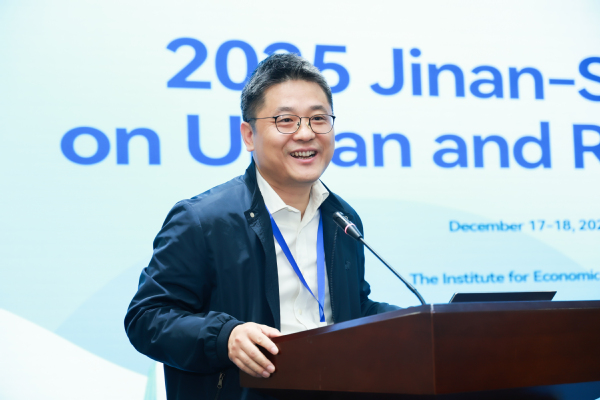
Welcome Speech by Professor Shuaizhang Feng
Keynote Speeches
On the morning of December 17, Professor Lu Han from the University of Wisconsin-Madison delivered a keynote speech entitled “The Housing Cost Channel: Monetary Policy and Search Frictions.”
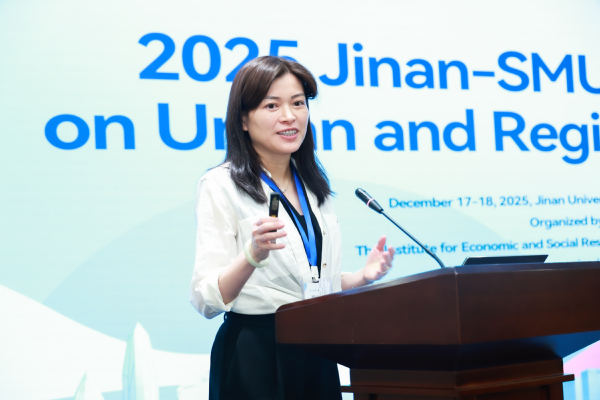
Keynote Speech by Professor Lu Han
On the morning of December 18, Professor Henry Overman from the London School of Economics and Political Science delivered a keynote speech entitled “People, Places and Firms: Improving Our Understanding of Productivity Disparities.”
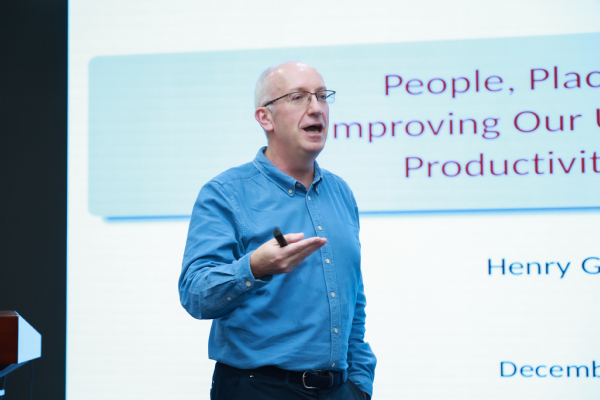
Keynote Speech by Professor Henry Overman
Parallel Sessions
During the presentation session, nearly 50 scholars presented their latest research on structural change, infrastructure, education, spillovers, urban policies, labor markets, real estate markets, urban amenities, transportation, public policy, household behavior, innovation, rental housing, city shape, and the environment.
Session 1.1: Structural Change
Zibin Huang (Shanghai University of Finance and Economics) presented a paper titled “Sex and the City: Spatial Structural Changes and the Marriage Market.”

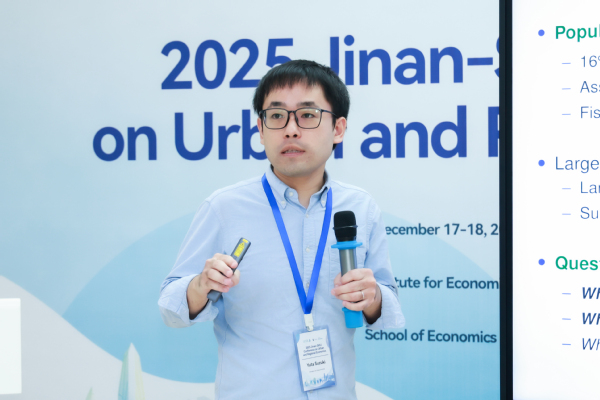
Yuta Suzuki (Shanghai Jiao Tong University) presented a paper titled “Living in a Ghost Town: The Geography of Depopulation and Aging.”
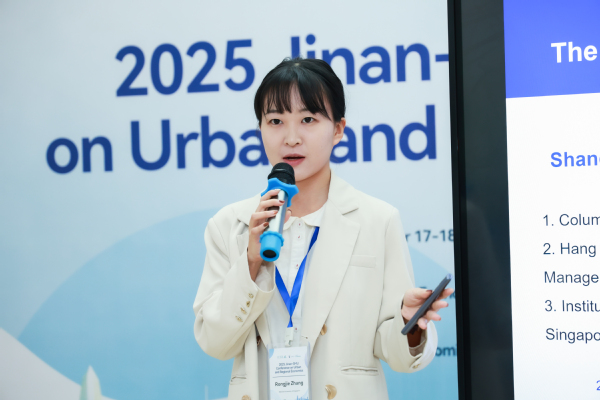
Rongjie Zhang (National University of Singapore) presented apaper titled “Competitive Investment in Human Capital: The Case of ‘Good School’ Premium in Housing Prices.”
Session 1.2: Infrastructure
Yichuan Zhang (Sun Yat-sen University) presented a paper titled “Counterproductive State Infrastructure: The Unintended Consequences of Traffic Cameras on Road Trips.”
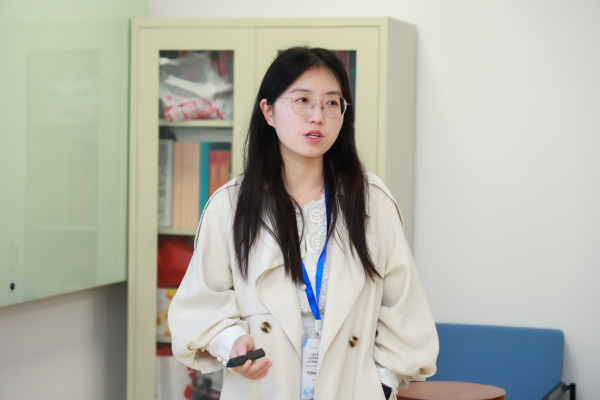
Qiuxia Gao (National University of Singapore) presented a paper titled “Power Up Consumption: Impact of Electric Vehicle Infrastructure on Household Finance.”
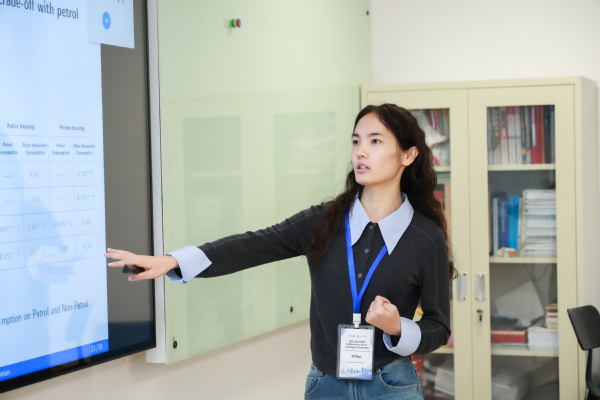
Saeed Tajrishy (Sharif University of Technology) presented a paper titled “From Flow to Fortune? The Economic Impacts of Agricultural Dams.”
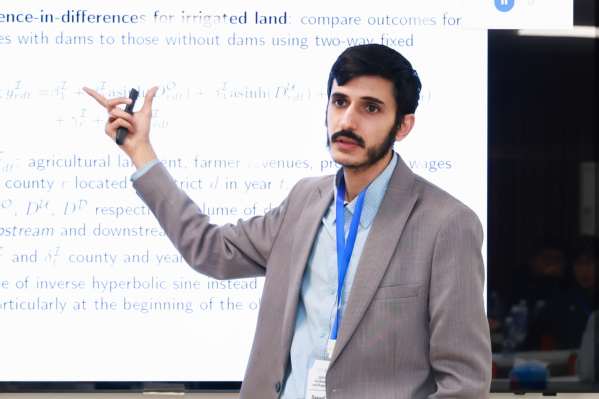
Session 1.3: Education
Le Kang (Nanjing University) presented a paper titled “Gone with the Aid: How Paired Assistance Program Affects High-Stakes College Choices.”
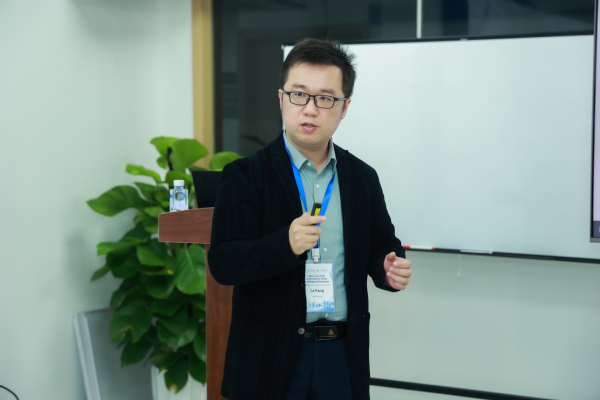
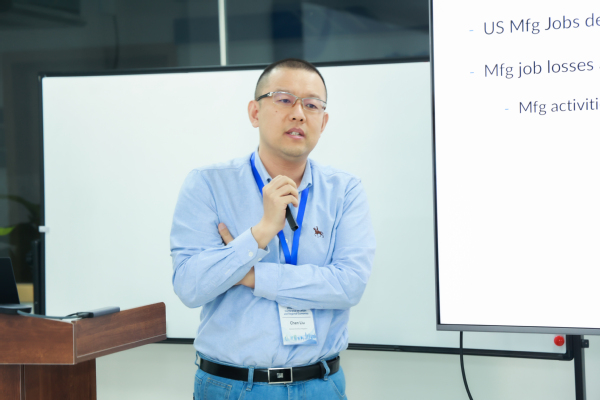
Chen Liu (National University of Singapore) presented a paper titled “How Local Economies Recovered from Manufacturing Job Loss: The Case of China Shock.”
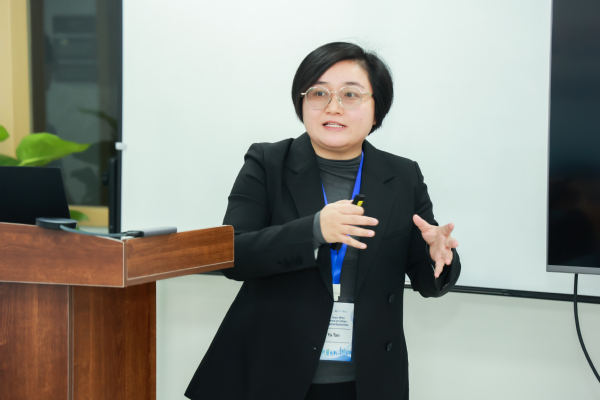
Ya Tan (University of International Business and Economics) presented a paper titled “Place-Based Affirmative Action in Higher Education: Evidence from China.”
Session 2.1: Spillovers
Zhi Wang (Fudan University) presented a paper titled “From Neighbors to Newborns: Fertility Spillovers Under China’s Selective Two-Child Policy.”

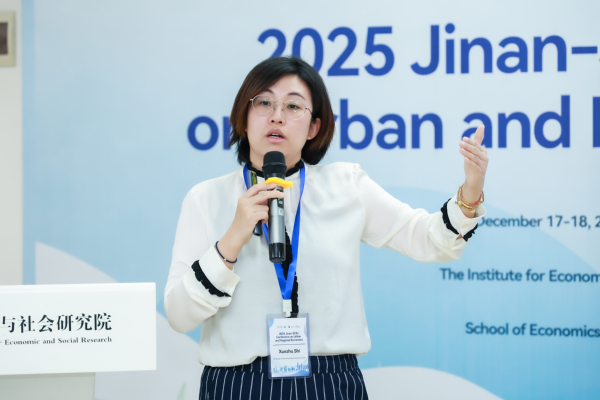
Xuezhu Shi (University of International Business and Economics) presented a paper titled “From Talent to Technology: Human Capital Spillovers and FinTech Adoption in Banking.”
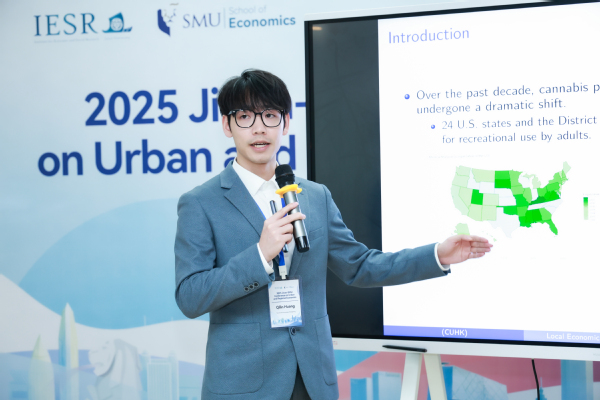
Qilin Huang (The Chinese University of Hong Kong) presented a paper titled “The Local Economic Effects of Recreational Marijuana Legalization: Evidence from the Restaurant Industry.”
Session 2.2: Urban Issues
Wei Long (Tulane University) presented a paper titled “The Hidden Costs of Police Brutality: Police-Involved Killings and Public Finance.”

Xiaozhou Ding (South Dakota State University) presented a paper titled “Schools and Neighborhoods: The Impact of School Attendance Boundary Changes.”
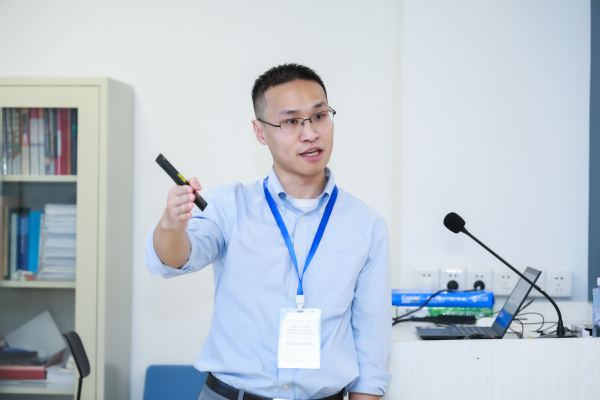
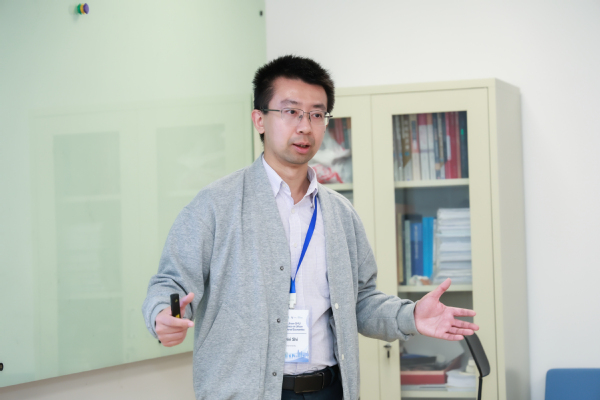
Wei Shi (Jinan University) presented a paper titled “The Rise of Early Civilization: Evidence from Ancient China.”
Session 3.1: Urban Policies
Thomas Monnier (Hitotsubashi Institute for Advance Study) presented a paper titled “The Informality Trade-Off: Wages and Rural-Urban Migration in South Africa.”

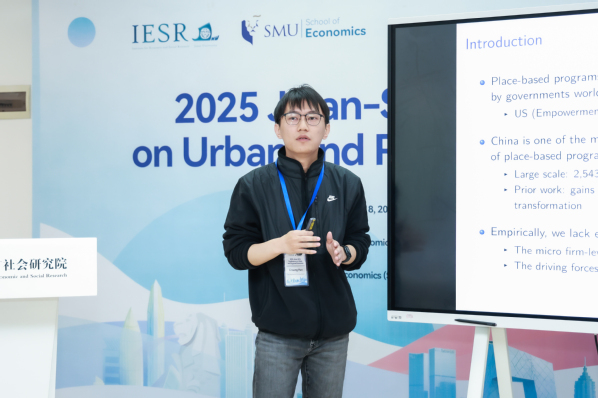
Linsong Han (The Chinese University of Hong Kong) presented a paper titled “Place-based Policy, Agglomeration, and Market Access: Evidence from Firm and Network Creation.”
Session 3.2: Labor Market
Xiaomeng Cui (Jinan University) presented a paper titled “Industrial Water Pollution, Agricultural Productivity and Labor Reallocation: Evidence from China.”
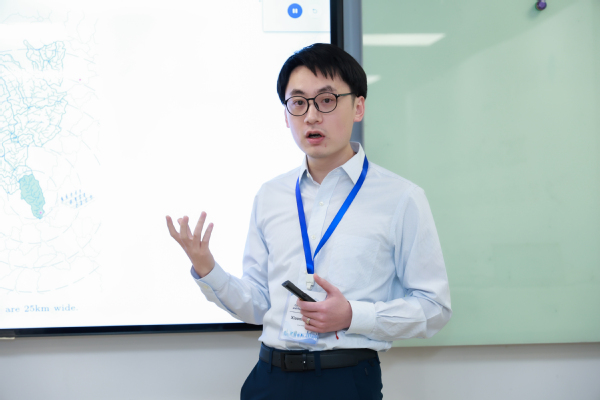
Jindong Pang (Wuhan University) presented a paper titled “From Formal to Informal: Digital Platforms and the Transformation of the Labor Market.”
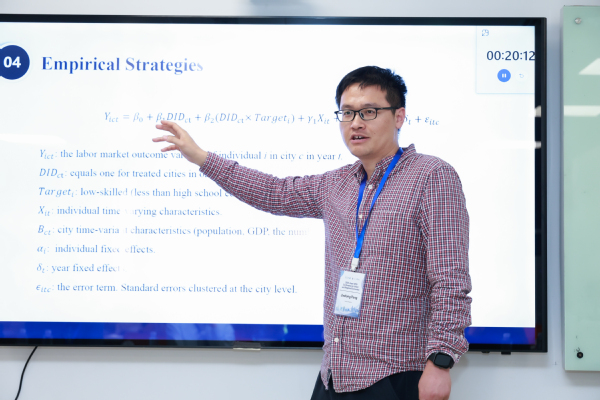
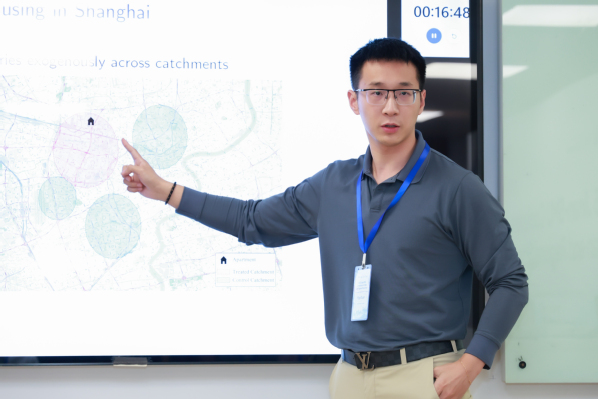
Yige Duan (Shanghai Jiao Tong University) presented a paper titled “Affordable Housing as Fringe Benefits: Implications for Workers’ Labor Market Outcomes.”
Session 3.3: Real Estate Finance
Kong Wang (Central China Normal University) presented a paper titled “Credit Access and Customer Satisfaction:Evidence from China’s Three-Red-Lines Policy.”

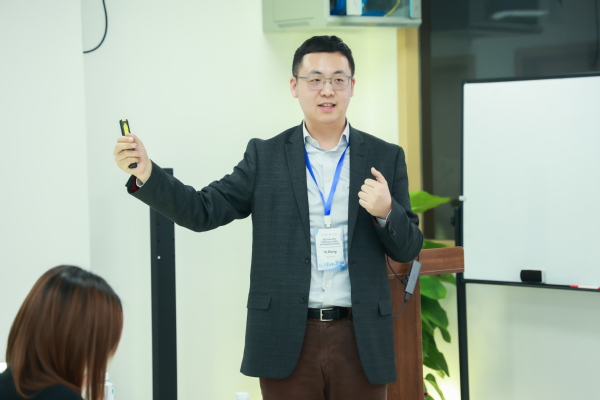
Yu Zhang (Peking University) presented a paper titled “Not in the Spread: Developer Defaults, Municipal Borrowing, and Bank Absorption in China.”
Session 4.1: Real Estate Market
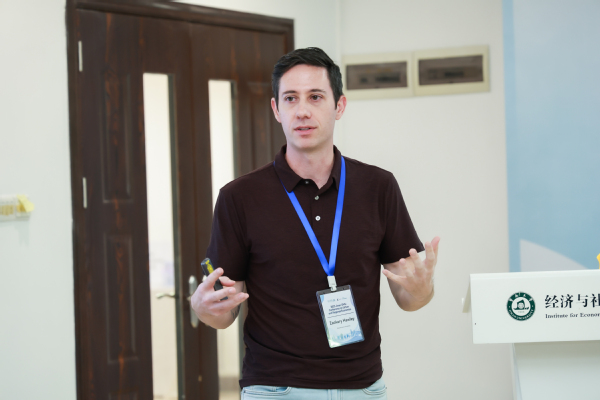
Zackary Hawley (Texas Christian University) presented a paper titled “Real Estate Agent Response to Hispanic/Latino Clients: Homophily, Local Demographic, and Regional Differences.”
Zhiren Hu (Cornell University) presented a paper titled “Outsourcing Contract Enforcement.”

Yixuan Wang (The Ohio State University) presented a paper titled “Steering and Spatial Mismatch.”
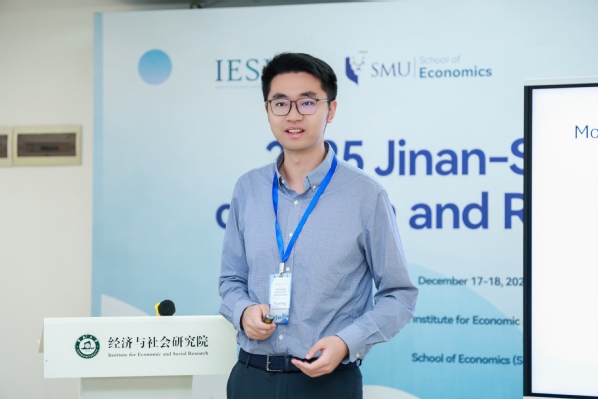
Session 4.2: Urban Amenities
Zhuoran Shang (Peking University) presented a paper titled “Infrastructure or Amenity: The Role of Bike Lanes.”
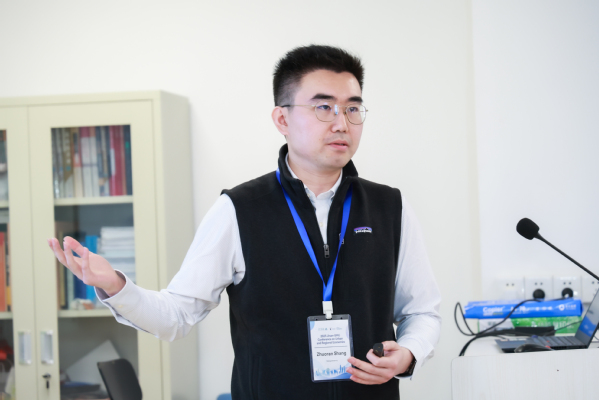
Qiao Wang (Jinan University) presented a paper titled “The Costs of Accessing Public Amenities: Evidence from China’s Commuting Areas.”
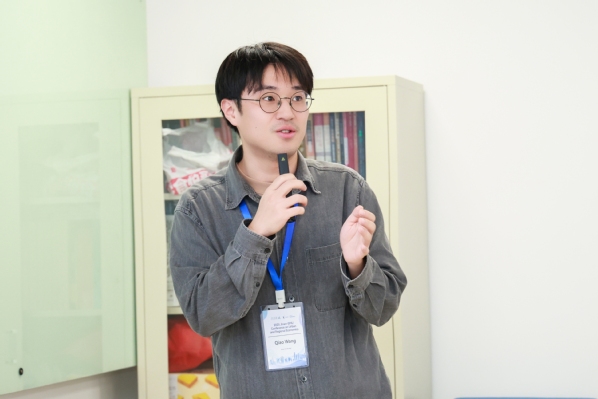
Lin Ma (Singapore Management University) presented a paper titled “The Geography of Service Quality.”
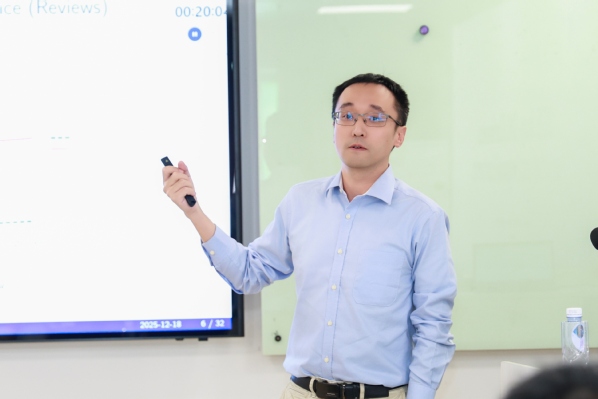
Session 4.3: Transportation
Cong Liu (Jinan University) presented a paper titled “Railroads and the Flow of Knowledge: Evidence from Historical China.”

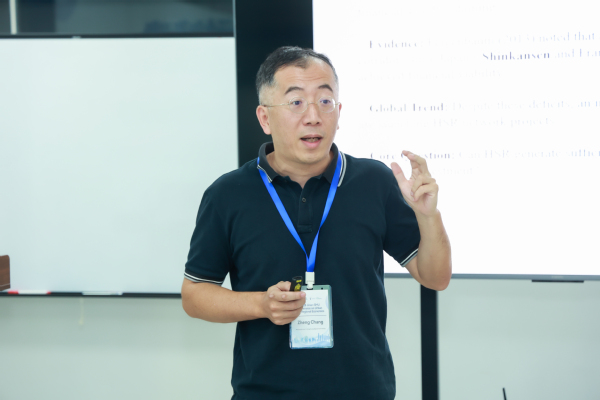
Zheng Chang (Beijing Normal-Hong Kong Baptist University) presented a paper titled “Cost-Benefits Realities in High-Speed Railways: Unveiling the Economic Gains through the Market Access Approach in China.”
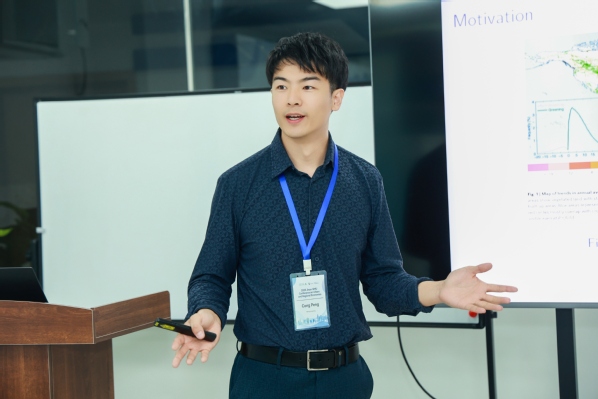
Cong Peng (Peking University) presented a paper titled “Roads to Trees? The Impact of Highway Expansion on Forest Quality in China.”
Session 5.1: Public Policy
Ying Fan (The Hong Kong Polytechnic University) presented a paper titled “Optimizing Public Housing Policy in a Dynamic Equilibrium.”

Meiping Sun (Fordham University) presented a paper titled “Do Public Transit Fares Hurt the Poor?”
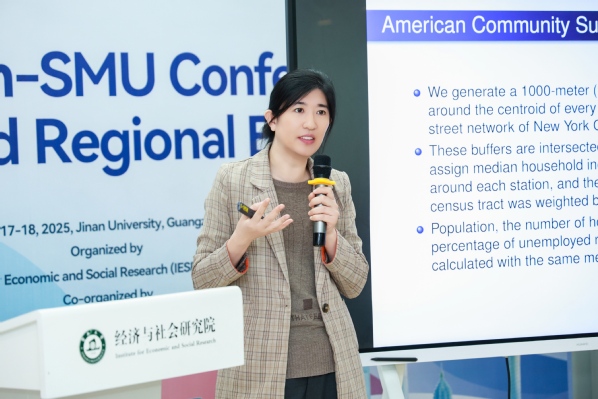
Jing Li (Singapore Management University) presented a paper titled “Housing Externalities in High-density Cities.”

Session 5.2: Household Behavior
Runliang Li (Guangdong University of Finance) presented a paper titled “Wealth, Heterogeneous Returns, and Portfolio Choice: Evidence and Theory.”
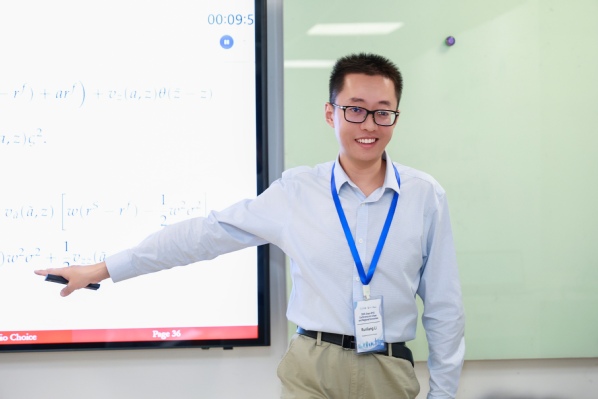
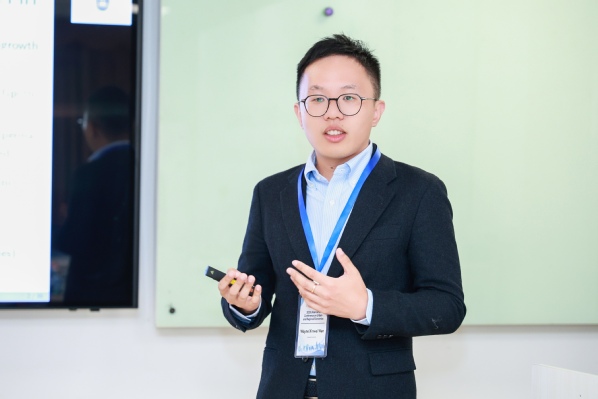
Wayne X. Wan (Monash University) presented a paper titled “Consumption Response to Permanent Income Shocks: Evidence from India’s Mobile Internet Rollout.”
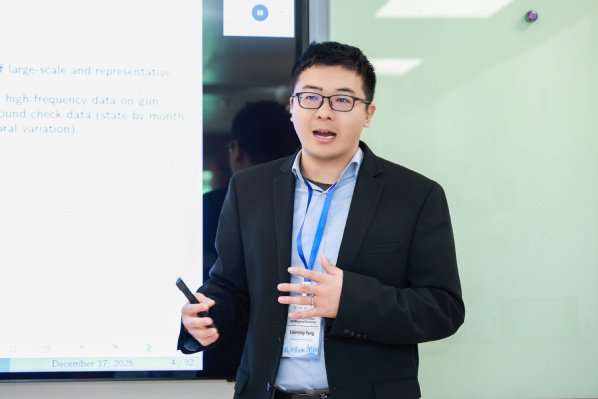
Liuming Yang (The Chinese University of Hong Kong) presented a paper titled “Friends, Fear, and Firearm: Social Ties and the Propagation of Defensive Behavior.”
Session 5.3: Innovation
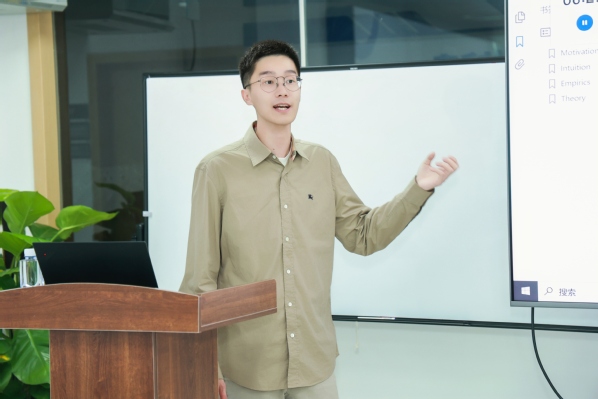
Runhong Ma (Renmin University of China) presented a paper titled “Floods, Collaborative Matching, and the Geography of Innovation.”
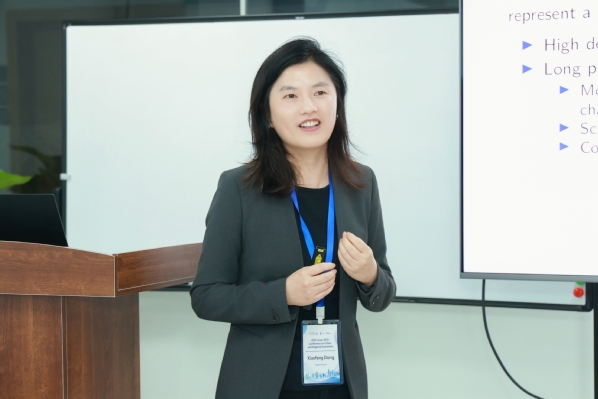
Xiaofang Dong (Xiamen University) presented a paper titled “Extreme Temperatures, Adaptive Behavior and Academic Productivity.”
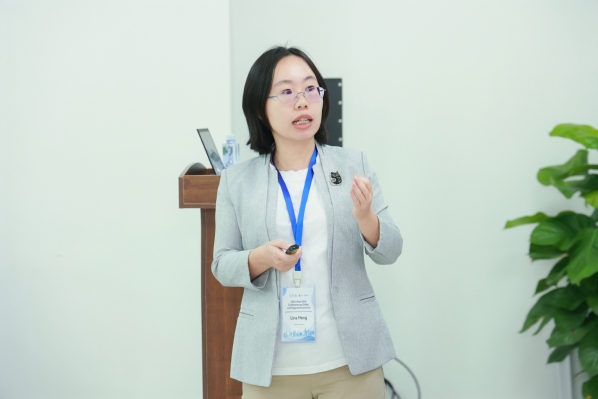
Lina Meng (Xiamen University) presented a paper titled “Subway Construction, Cafe Talks, and Innovation.”
Session 6.1: Rental Housing
Yirui Jiang (Southwestern University of Finance and Economics) presented a paper titled “Paying More for Less: Racial Disparities in Rental Housing Quality.”
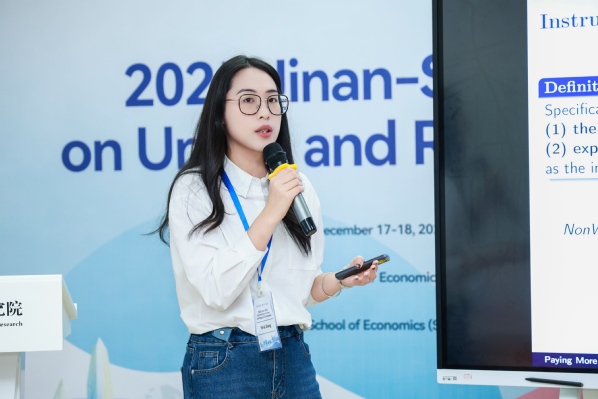
Michael B. Wong (The University of Hong Kong) presented a paper titled “Housing Assignment with Endogenous Supply: Theory and Application to Rent Control.”
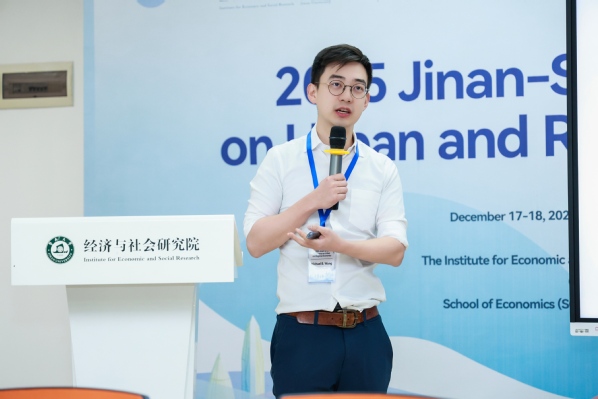
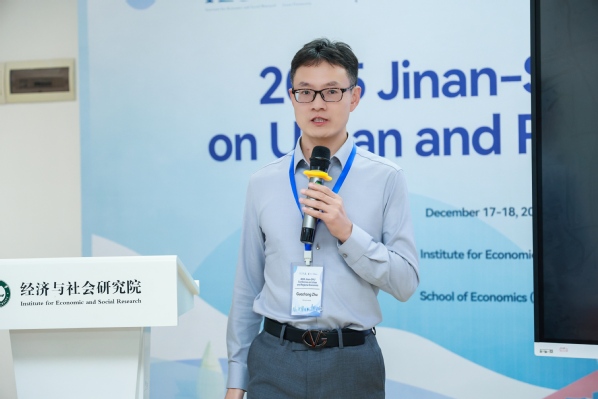
Guozhong Zhu (University of Alberta) presented a paper titled “A Dynamic Model of Urban Growth and the Evolution of Real Estate Rents and Prices.”
Session 6.2: City Shape
Siqiang Yang (Zhejiang University) presented a paper titled “Effectiveness of Transportation Policies and Urban Structure.”

Fan Zhang (Jinan University) presented a paper titled “The Spatial Consequences of Hukou Reform.”
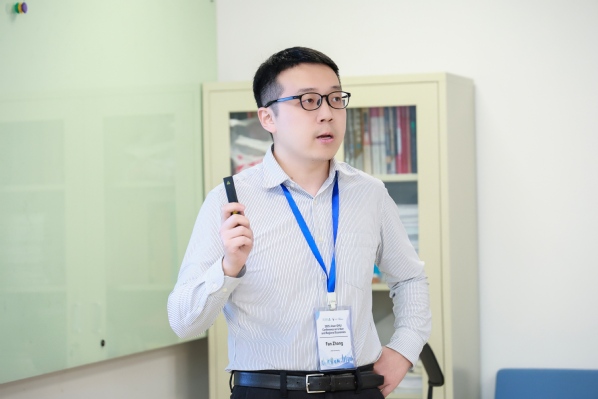
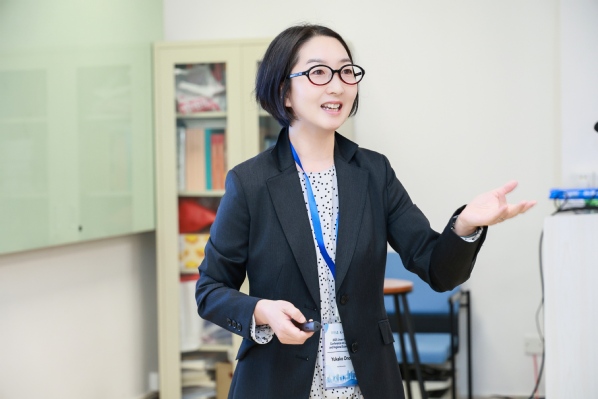
Yukako Ono (Keio University) presented a paper titled “Geography, Public Goods, and Municipal Borders: Geospatial Analysis of the Japanese Municipal Mergers.”
Session 6.3: Environment
Kangkai Wang (The University of Hong Kong) presented a paper titled “Microclimate Risks and Consumer Adaptation.”

Yang Jiao (Singapore Management University) presented a paper titled “‘Polluted’ Export Restrictions: the Unintended Consequences of China’s Rare Earth Quota Policies.”

Yun Qiu (Jinan University) presented a paper titled “The Social Benefits of Desulfurization the Coal Power Sector in a Developing Economy.”
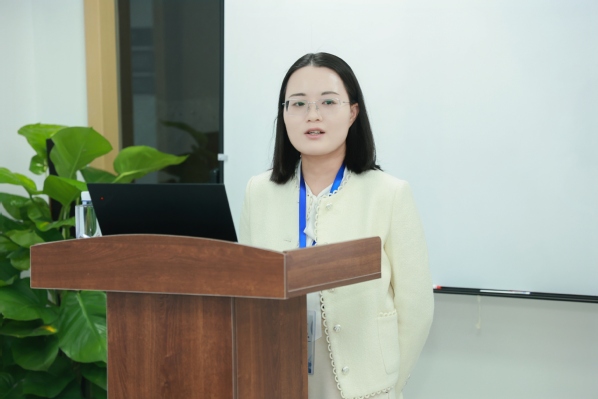
The event concluded with insightful discussions and garnered positive feedback from many participants. The successful hosting of this Conference has established a solid foundation for enhanced future exchanges and collaboration between IESR and scholars across the globe.